


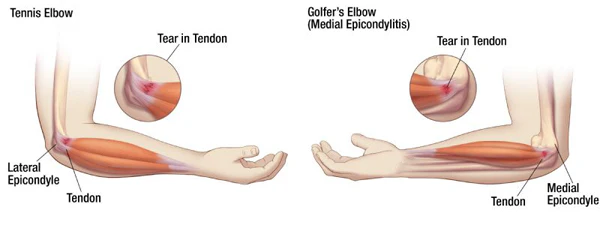
If you have ever felt a nagging ache in your arm that makes it hard to lift a coffee mug or turn a doorknob, you have likely encountered one of the two most common repetitive strain injuries: Tennis Elbow or Golfer’s Elbow. Despite their names, you don’t need to step onto a court or a green to suffer from them. These conditions are simply nicknames for tendonitis that occurs on different sides of your arm.
Understanding the difference between the two is the first step toward choosing the right recovery path, whether that involves an elbow support for gym sessions, a specific tennis elbow band, or a trip to a specialist.
Let’s dive into the anatomy of these pains and how to manage them like a pro.
What is Tennis Elbow? (Lateral Epicondylitis)
Tennis Elbow is the most frequent cause of outer arm pain. It totally affects the tendons that connect your forearm muscles to the bony bump on the outside of your elbow. These muscles are quite responsible for extending your wrist, basically, the movement of pulling your hand back toward your forearm.
How it Feels
- Location: The pain is focused on the outside of the elbow.
- The Trigger: Pain usually flares up when you are gripping something tightly or twisting your wrist.
- Daily Impact: You might feel a sharp sting when opening a jar, shaking hands, or typing for long periods.
Who Gets It?
While tennis players get it from the backhand stroke, it is far more common in painters, carpenters, and office workers. In the fitness world, you might feel this during pulling movements like rows or pull-ups if your grip is doing too much of the work.
What is Golfer’s Elbow? (Medial Epicondylitis)
Golfer’s Elbow is the mirror image of its tennis counterpart. It primarily impacts the inner elbow tendons. These tendons are attached to the muscles that flex your wrist, the movement of curling your palm toward your inner forearm.
How it Feels
- Location: The pain is quite focused on the inside of the elbow (the side closest to your body).
- The Trigger: Pain generally occurs when you are squeezing an object or curling your wrist inward.
- Daily Impact: It can cause weakness in your grip or a tingling sensation that travels down into your ring and pinky fingers.
Who Gets It?
Golfers get it from the downswing impact, but it is also common in plumbers, construction workers, and weightlifters. In the gym, heavy bicep curls or hooking your wrists during lat pulldowns are classic ways to irritate the inner elbow.
The Role of Elbow Support
Once you have identified which side is hurting, you can look into support options. Using the right gear can provide the mechanical advantage your tendons need to heal.
1. The Tennis Elbow Support Band
This is a targeted strap worn about two inches below the elbow joint. It is designed to compress the muscle belly rather than the joint itself.
- How it helps Tennis Elbow: By squeezing the forearm muscles, it creates a new attachment point for the tendon. This prevents the pulling force from reaching the painful spot on the outside of the bone.
- How it helps Golfer’s Elbow: You can actually wear the same style of band for golfer’s elbow; you simply rotate the compression pad so it sits on the inner forearm muscles instead.
2. Elbow Support for Gym (Sleeves)
If your pain is more general or occurs during heavy lifting, a full neoprene sleeve is often the better choice.
- Compression: It keeps the joint tight, which can reduce the micro-vibrations that irritate tendons during heavy sets.
- Warmth: Tendons have a notoriously poor blood supply. The heat retained by a sleeve keeps the area supple, making the tissue more resilient during your workout.
Tennis Elbow Vs. Golfer’s Elbow
| Feature | Tennis Elbow | Golfer’s Elbow |
| Scientific Name | Lateral Epicondylitis | Medial Epicondylitis |
| Pain Location | Outside of the elbow | Inside of the elbow |
| Main Action | Wrist extension (lifting hand up) | Wrist flexion (curling hand down) |
| Common Cause | Typing, painting, backhand sports | Heavy lifting, hammering, golf |
| Best Support | Band with pad on outer forearm | Band with pad on inner forearm |
Simple Relief Strategies
If you are currently dealing with a flare-up, try these layman-friendly steps:
- The Two-Finger Rule: When wearing a support band, it should be firm but not tight enough to turn your hand blue. You should be able to slide two fingers under the strap comfortably.
- The Ice Trick: For acute pain (sharp and hot), rub an ice cube directly on the painful bony bump for three to five minutes. This numbing effect can break the pain cycle.
- Adjust Your Grip: In the gym, try using a suicide grip (thumbless) or lifting straps for a few weeks. This offloads the forearm muscles and lets the larger muscles of the back and chest do the work.
- Rest is Not a Dirty Word: Sometimes, the best elbow support is simply putting the weight down for a week. Tendons take much longer to heal than muscles because they don’t have the same rich blood flow.
Wrapping Up
Whether it is the outside or the inside of your arm that is complaining, the message is the same which is that your tendons are overworked. Identifying whether you have Golfer’s or Tennis Elbow allows you to place your tennis elbow support band in the right spot and choose the correct stretches.
Remember, a support sleeve is a tool to help you stay active, but it shouldn’t be a permanent crutch. Use the support to calm the inflammation, then focus on building a stronger, more balanced arm that can handle whatever you throw at it, whether that is a tennis ball, a golf club, or a heavy barbell.
