


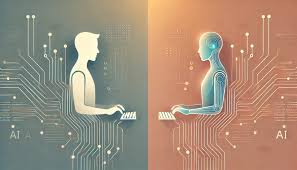
The digital landscape of 2026 is one defined by a paradox: while AI writing tools have reached unprecedented levels of efficiency, the value of “human-to-human” connection has never been higher. As large language models (LLMs) flood the internet with content, readers and search engines alike have developed a sophisticated “uncanny valley” reflex, an ability to sense when text is mathematically perfect but emotionally hollow.
For content creators, the challenge is no longer just producing words; it is ensuring those words resonate with an audience that is increasingly skeptical of synthetic output. This is where AI text humanizer tool technology bridges the gap, transforming rigid machine logic into relatable, high-impact narratives.
The Evolution of AI Writing: From Drafting to Humanizing
In the early days of generative AI, tools were primarily used for speed. A creator could generate a 1,000-word blog post in seconds, but the result often suffered from “AI hallmarks”: repetitive sentence structures, a lack of anecdotal evidence, and an overly cautious or “beige” tone.
Today, the workflow has shifted. Savvy creators use AI as a primary architect rather than a final builder. They utilize the efficiency of tools like ChatGPT or Claude to lay the foundation of a piece, then apply text humanization technology to refine the nuances.
How AI Text Humanizers Help Content Creators
The core question for modern writers is: How do AI text humanizers help content creators produce more natural-sounding content? The answer lies in their ability to inject “linguistic chaos” into predictable patterns. Human writing is inherently messy; we use sentence fragments for emphasis, vary our pacing, and use idioms that don’t always follow strict formal logic.
Humanization tools analyze the statistical regularity (often called “perplexity” and “burstiness”) of AI text and reconfigure it. By breaking up uniform sentence lengths and introducing varied vocabulary, these tools help creators:
- Establish Trust: Readers are more likely to engage with content that feels like it was written by someone with lived experience.
- Improve Readability: AI-generated text often feels like a “wall of logic.” Humanizers introduce rhythm, making the text easier to digest.
- Maintain SEO Performance: While search engines don’t strictly “ban” AI content, they prioritize “Helpful Content.” Text that reads naturally typically has higher dwell times and lower bounce rates two critical signals for ranking.
The Mechanics of Natural-Sounding Content
To understand why humanization is necessary, we must look at how machines and humans differ in their approach to language.
1. Sentence Variety (Burstiness)
AI models tend to produce sentences of similar lengths. A humanizer will intentionally shorten some sentences to create an impact “Like this.” while lengthening others to provide deep, flowing explanations. This mimicry of human breath and thought patterns is essential for a natural feel.
2. Emotional Intelligence and Tone
Standard AI output is often neutral to a fault. Humanizers can be tuned to specific “modes” : conversational, professional, or even humorous. They replace generic transitions (like “Furthermore” or “In conclusion”) with more organic bridges that reflect a specific brand voice. For those looking to see this in action, you can humanize AI text here to observe how a sterile draft transforms into a lively narrative.
3. Contextual Nuance
Early paraphrasing tools simply swapped synonyms, which often resulted in “word salad.” Modern humanizers use deep learning to understand the intent of a paragraph. They ensure that technical accuracy remains intact while the delivery becomes more accessible.
Best Practices for Using Humanization Technology
While these tools are powerful, they are most effective when used as part of a “Human-in-the-loop” system.
| Phase | AI Responsibility | Human/Humanizer Responsibility |
| Ideation | Research, data aggregation | Strategy, emotional hook |
| Drafting | Structure, core arguments | Narrative flow, personal anecdotes |
| Refinement | Error checking | Humanization, tone adjustment |
| Final Review | Plagiarism scan | Fact-checking, final “vibe” check |
The Ethics of “Undetectable” Text
In 2026, the goal of humanization is not necessarily to “trick” detectors, but to serve the reader. High-quality humanization technology focuses on quality over evasion. If a piece of content is genuinely helpful and reads beautifully, its origin becomes secondary to its value. However, creators should always be transparent about their processes in academic or journalistic settings.
The Future of AI and Human Collaboration
As we look toward the end of the decade, the line between “AI-written” and “Human-written” will continue to blur. We are moving toward a reality where AI handles the cognitive load of information retrieval, while humans aided by humanization tools handle the creative load of connection.
Content creators who thrive will be those who master these tools to amplify their own voices, rather than replace them. By focusing on the “human” elements of storytelling vulnerability, humor, and unique perspective and using technology to polish the delivery, creators can produce content that stands out in an infinite sea of data.
Frequently Asked Questions
Is using an AI humanizer considered cheating?
It depends on the context. In marketing and business communication, it is seen as a high-tech editing tool similar to a more advanced Grammarly. In academic settings, however, using any tool to hide the use of AI may violate specific institutional policies. Always check the guidelines of your specific platform or organization.
Do humanizers affect the accuracy of the information?
Sophisticated humanizers are designed to preserve the original meaning. However, because they rephrase and restructure text, there is always a small risk of “hallucination” or shifting context. Content creators should always perform a final factual review after the humanization process.
Can search engines like Google detect humanized AI text?
Search engines are constantly evolving, but their primary goal is to surface content that satisfies user intent. If a humanizer makes the text more readable and engaging for a human audience, it generally aligns with what search engines want to promote, regardless of whether it was assisted by AI.
How does humanization technology differ from a regular paraphraser?
A paraphraser simply swaps words for synonyms. A text humanizer uses advanced neural networks to rewrite the structure and rhythm of the text. It focuses on linguistic patterns like “burstiness” and “perplexity” to mirror the way humans naturally vary their writing style.
Conclusion: The New Frontier of Digital Expression
As we navigate the complexities of a content-saturated world, the integration of AI writing tools and text humanization technology represents more than just a shortcut; it marks a new era of digital expression. By understanding how AI text humanizers help content creators produce more natural-sounding content, writers can effectively bridge the gap between machine efficiency and human resonance.
These tools allow us to strip away the clinical rigidity of raw AI output, replacing it with the warmth, rhythm, and nuance that define authentic communication. Ultimately, the future of content creation doesn’t lie in choosing between human or machine, but in the masterful collaboration of both ensuring that even as our tools become more automated, our stories remain profoundly and impactfully human.